

A ready-to-wear house that archives Ibadan.
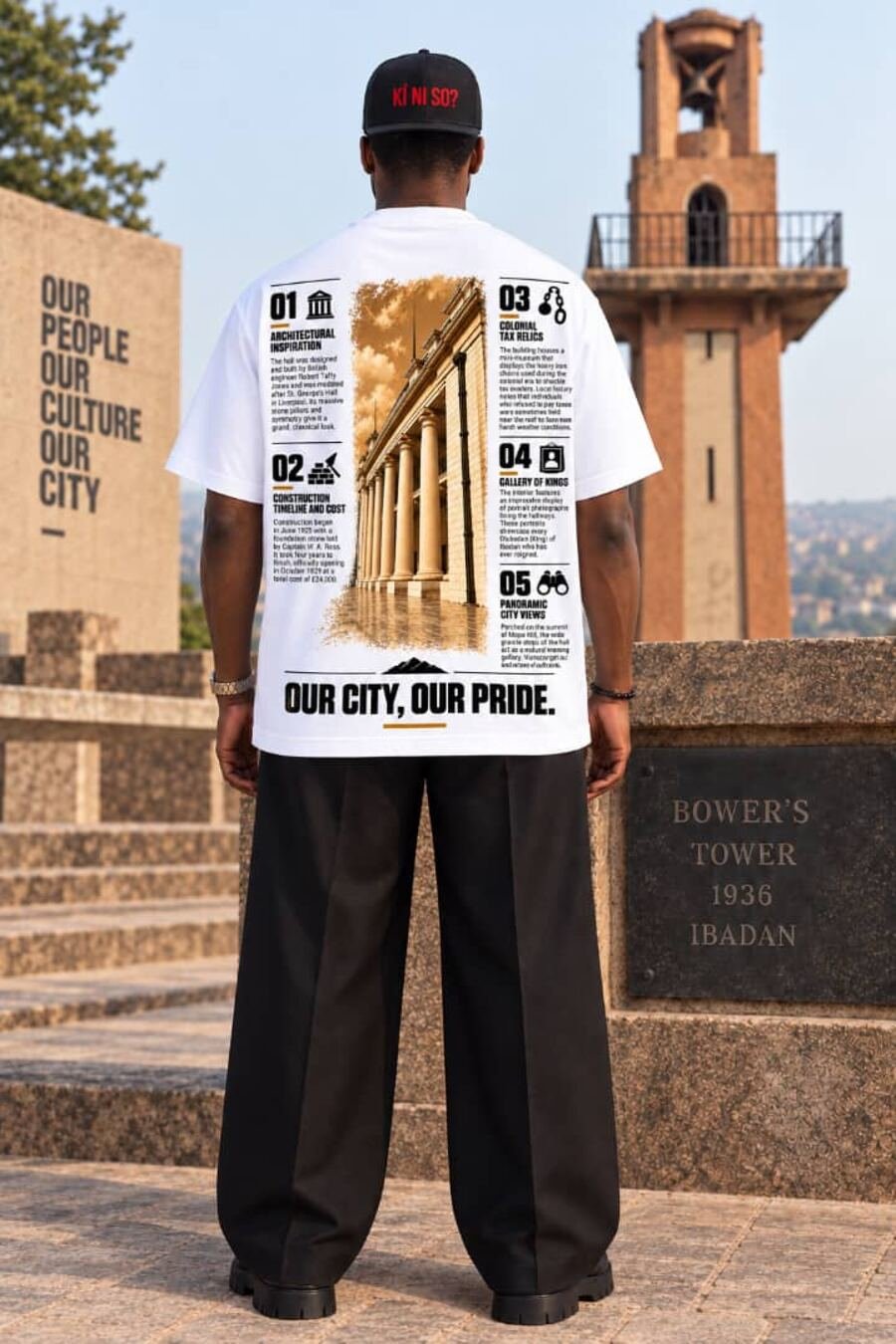
Heavy garments, researched artwork, and a story printed at length on the back — made for people who already know this city, not for people learning about it for the first time.
Most city merchandise is souvenir.
It is cheap cotton, a landmark traced badly, sold to people passing through. Kí Ni So is the opposite proposition: heavy garments, researched artwork, and a story printed at length on the back, made for people who live here and already know. The customer is not learning about Ibadan from the shirt — the customer is confirming something.
That is the whole tension the brand lives in: street language, museum standards. The words are casual. The execution is not.
Where the name comes from
Kí ni so? is how Ibadan opens a conversation — the question you throw at a friend before anything else. It has no equivalent in a boardroom. It belongs to the street, the shop front, the bus park, the group chat.
Taking that as the name of a ready-to-wear house does three things: it signals the brand is from here, not visiting. It makes the brand a question rather than a statement — unusually generous for a fashion name, since it invites a reply. And it gives every garment a job: the shirt is the answer.
What the Brand Stands On
Four pillars. Every design should be defensible under at least two of them.
Nothing goes on a garment without a documented reason. Research first, artwork second.
The tone is upright, never pleading. Ibadan is not asking to be taken seriously.
Fit, weight, and finish are luxury-grade. The joke is in the language, never in the make.
Made here where possible. Shot here always. Cast from here always.
